
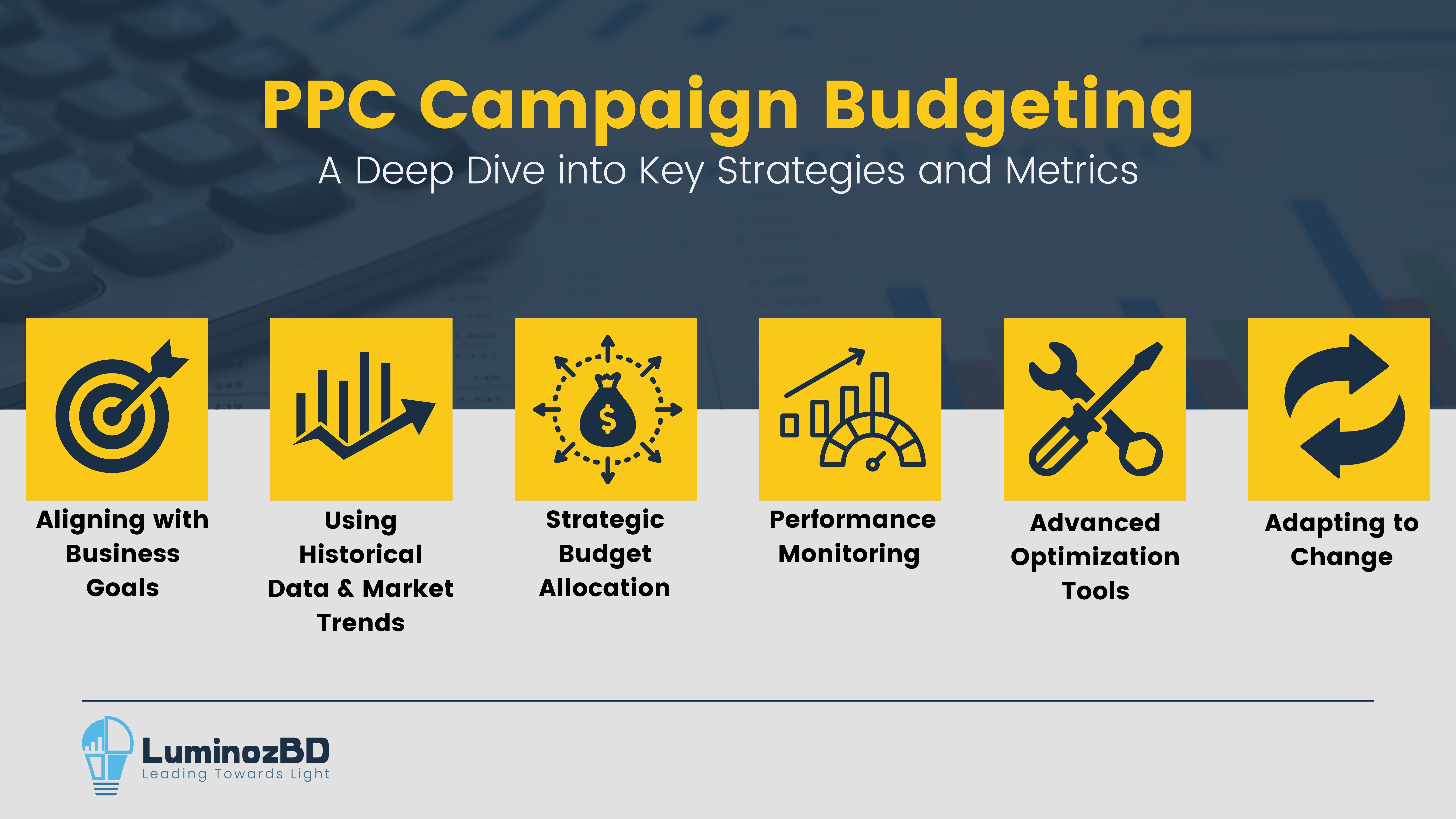
How Do Agencies Determine Budgets for PPC Campaigns? A Deep Dive into Key Strategies and Metrics
When we set budgets for PPC campaigns, we start by looking at clear data like client goals, target audience size, and competition. Agencies determine budgets by analyzing past campaign performance, estimating the cost per click, and matching these with the desired business outcomes. This helps us decide how much money will create the best results without overspending.
We also consider industry trends and seasonal factors that can affect how much advertisers need to spend. Understanding the client’s goals—whether it’s brand awareness, leads, or sales—shapes how we allocate the budget for the best return on investment.
By combining real numbers with strategic planning, we create budgets that are realistic and aligned with each campaign’s priorities. This approach helps avoid guesswork and focuses on what drives success.
Core Principles of PPC Budget Determination
To set a PPC budget effectively, we focus on clear factors that guide our decisions. These include the client's business goals, how we define their target audience, and the marketing objectives behind the campaign. We also analyze past data and balance key performance metrics to make smart budget choices.
Understanding Business Goals and Target Audience
We start with the business goals. Clear goals like increasing leads, driving sales, or building brand awareness shape how much budget we need. For example, if the goal is rapid lead generation, we allocate more budget to high-performing keywords and times.
Next, we examine the target audience. Knowing their location, demographics, and online habits helps us choose platforms and adjust bids. If the audience is small but highly specific, we budget differently than for broad, mass-market audiences.
This approach ensures the budget supports reaching the right people with relevant ads that meet the company's aims.
Allocating Budgets Based on Digital Marketing Objectives
Our budget plans reflect the digital marketing objectives outlined in the overall marketing strategy. If the goal is brand awareness, budgets lean toward impressions and reach. For direct response goals, we focus on clicks and conversions.
We use budget tiers depending on objectives:
- Brand Awareness: Larger daily budgets across broad networks.
- Lead Generation: Medium budgets targeting specific keywords with high intent.
- Sales: Flexible budgets emphasizing conversion tracking and ROI.
This system keeps budget allocation aligned with measurable outcomes, preventing overspending on low-value traffic.
Leveraging Historical Data and Market Trends
We rely on historical data from past campaigns, competitor activity, and market trends to guide how much to invest. Historical click-through rates (CTR), conversion rates, and cost-per-click (CPC) inform realistic budget estimates.
Tracking marketing trends like seasonal demand or new search behaviors allows us to adjust budgets proactively. For example, certain products may see higher interest during holidays, prompting higher budget allocation in those months.
Using data minimizes guesswork and helps avoid setting budgets too low to compete or too high without return.
Balancing Performance Metrics and Conversion Data
We continuously monitor performance metrics such as CTR, conversion rate, and cost per acquisition (CPA). This helps us decide whether current spending is efficient.
If conversion data shows a high CPA, we might reduce budget or pause low-performing campaigns. Conversely, strong ROI signals allow us to increase budgets confidently.
Balancing these metrics ensures budget allocation maximizes business impact and supports sustainable growth over time.
Advanced Strategies and Tools for Optimizing PPC Campaign Budgets
We focus on precise methods to improve PPC budget use. This includes targeting the best keywords, choosing the right bidding approach, measuring returns carefully, and adjusting to market and seasonal shifts. These steps help us make smarter, data-driven decisions that boost campaign results.
Keyword Research and Targeting Techniques
Effective keyword research targets terms that bring the highest conversion rates. We use tools like Google Keyword Planner and SEMrush to find keywords with strong user intent and manageable competition. Long-tail keywords often lower cost per acquisition (CPA) while attracting qualified traffic.
Audience targeting refines the process further. By segmenting users based on demographics or interests, we increase the chance of reaching those ready to convert. Testing ad placements also helps us identify where to invest budget for the best returns.
Regularly reviewing and updating keywords prevents wasted spend on underperformers. We prioritize those that show a consistent return on investment (ROI) and pause or adjust bids on low-performing phrases. This approach keeps our campaigns scalable and efficient.
Bidding Strategies: Manual vs Automated Approaches
Manual bidding lets us control bids on specific keywords, which is useful for campaigns needing precise budget management. It allows us to focus spend on high-value keywords and adjust bids based on performance data. However, it requires more time and expertise.
Automated bidding uses machine learning to optimize bids in real time. Strategies like Target ROAS or Enhanced CPC adjust bids to maximize conversions or revenue within set limits. These tools save time and enhance scalability across large campaigns.
We often test both to find what works best. A/B testing different bidding strategies provides data on the impact each has on KPIs, like cost per acquisition and conversion rate. Combining manual oversight with automated tools can lead to the best results.
Analyzing Conversion Rates and ROAS for Smart Allocation
Tracking conversion rates and return on ad spend (ROAS) is key to budget decisions. We analyze which campaigns and keywords deliver the highest ROAS, ensuring funds focus where they generate profit. Low-performing segments are trimmed to improve overall efficiency.
Using tools like Google Analytics and PPC platform dashboards, we monitor cost per acquisition alongside conversion rates. This data helps us understand user behavior and the real impact of ads. The goal is a positive ROI and continuous campaign growth.
We also use testing and experimentation to refine allocation. By adjusting budgets based on performance, we increase spending on campaigns that exceed target ROAS and reduce it where returns are weak.
Adaptation to Market Changes and Seasonal Trends
Market changes and seasonal trends affect PPC performance. We track shifts in user behavior and competitor activity to stay ahead. For example, during holidays, we increase bids on timely keywords to capture higher demand.
Seasonal trends require flexible budgets. We allocate more during peak times and scale back when interest drops. Monitoring real-time data helps us react quickly to unexpected market changes or shifts in consumer interest.
We also adjust targeting and ad placements based on these patterns. This proactive approach keeps campaigns aligned with current market conditions, enhancing both efficiency and ROI over time.



0 Comment